
 See My Latest Article on HelloNation
What makes a plant suitable for a pool area?
The best plants around pools are heat-tolerant, relatively tidy, non-invasive, and suited to the amount of sun and moisture available. They should also be comfortable near hard surfaces that reflect heat and should not create excessive leaf litter, berries, thorns, or aggressive roots.
Pool planting is different from ordinary garden planting. A plant may grow well in the region but still be a poor choice beside the water if it drops flowers into the pool, attracts large numbers of stinging insects, blocks equipment access, or grows too large for the space.
In Milton, GA, pool landscapes commonly face hot, humid summers, strong afternoon sun, occasional dry periods, and heavy or compacted soils in some yards. Plant selection should account for all of those conditions rather than relying on appearance alone.
Which plants grow well in full sun beside a pool?
Full-sun pool beds benefit from plants with durable foliage and moderate water needs. Several options are well adapted to warm Southern conditions.
- Dwarf yaupon holly: This evergreen shrub tolerates heat, sun, pruning, and a range of soil conditions. Dwarf forms stay more manageable than full-size hollies, although spacing is still necessary for mature width.
- Dwarf palmetto: A native palm-like plant with tough, fan-shaped foliage. It provides a tropical appearance without requiring the winter protection associated with many tender palms.
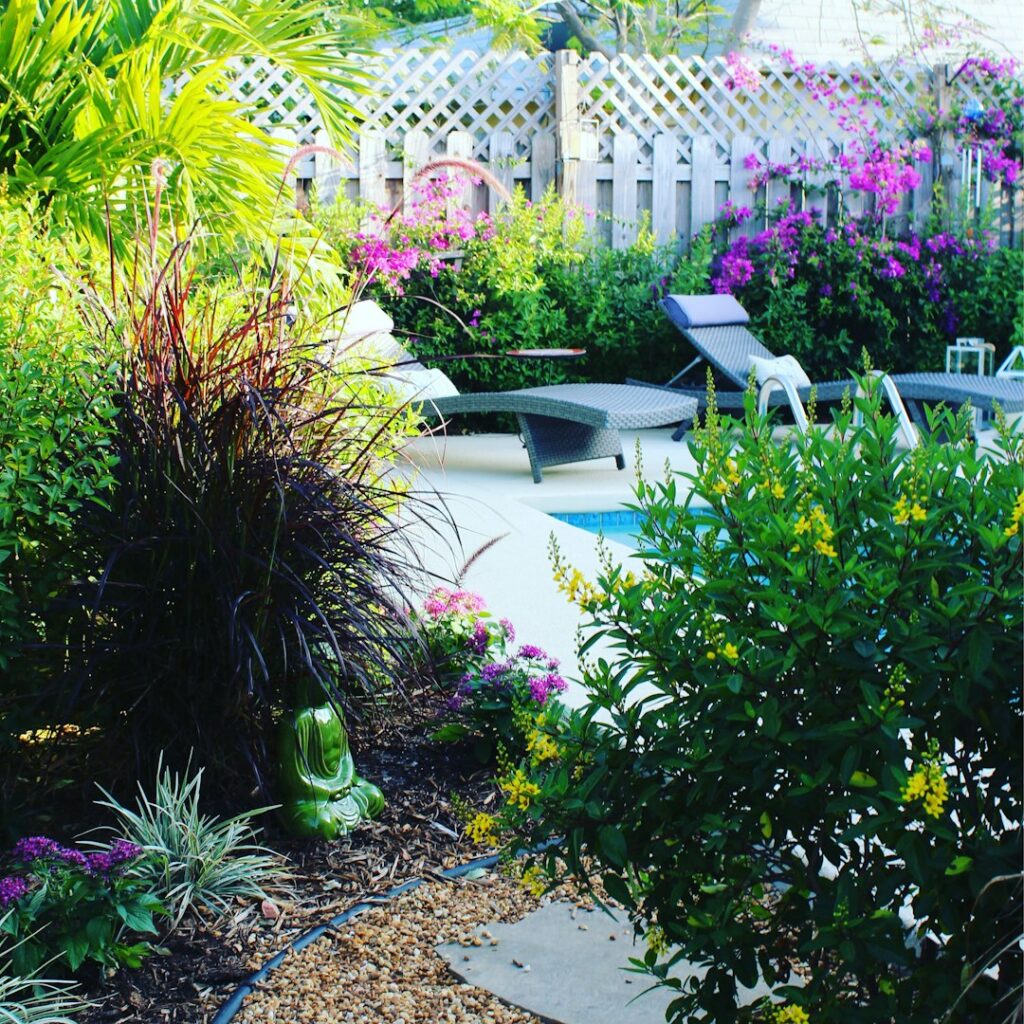
- Muhly grass: Pink muhly grass produces airy flower plumes in fall and works well as a soft accent against stone, concrete, or dark fencing. It needs good drainage and should not be kept constantly wet.
- Liriope: Often called lilyturf, liriope forms dense clumps and is useful along the outer edge of a pool bed. It handles sun to partial shade and generally stays low enough to preserve sightlines.
- Society garlic: This strappy-leaved perennial tolerates heat and sun while producing light purple flowers. Its foliage has an onion-like scent, which some households appreciate as a deterrent to browsing animals.
Ornamental grasses can be especially useful because they add movement without forming heavy overhead canopies. They should be trimmed at the appropriate seasonal time so dry foliage does not blow into the water.
What plants work best in partial shade?
Many pool areas receive changing light because of fences, homes, screened enclosures, or nearby trees. Partial-shade plants are often better for the east or north side of a pool area and for beds that receive morning sun but afternoon protection.
Good choices include:
- Oakleaf hydrangea: This native shrub offers large leaves, seasonal flowers, and attractive peeling bark. It is better placed several feet away from the water rather than directly beside the coping because mature plants can become broad.
- Japanese plum yew: A low-maintenance evergreen with fine-textured foliage. It performs well in shade and can provide structure without the spiny leaves found on some hollies.
- Cast iron plant: Useful for deeply shaded areas where many flowering plants struggle. Its broad leaves create a lush appearance, but fallen leaves should be removed regularly if the planting area is close to the pool.
- Aspidistra and similar shade-tolerant foliage plants: These can fill difficult spaces beneath screened structures or beside walls, provided the soil drains adequately.
- Camellia: Evergreen and attractive during the cooler months, but it should be positioned away from the immediate pool edge. Flowers can fall into the water, and mature plants require enough room for air circulation.
Partial shade does not always mean moist soil. Areas beneath rooflines or beside concrete may remain surprisingly dry, while low spots can stay wet after storms. Check the soil before choosing plants based only on light exposure.
Are flowering plants a good idea around a swimming pool?
Flowering plants can add color, but placement matters. Plants with abundant blooms may attract bees, wasps, and other pollinators. That is beneficial for the garden but not always desirable beside a pool where people walk barefoot or gather frequently.
Use flowering plants in beds farther from ladders, steps, seating areas, and the narrow walking zone around the pool. Heat-tolerant options may include:
- Coneflower
- Black-eyed Susan
- Salvia
- Coreopsis
- Daylily
- Dwarf gardenia in suitable drainage and light conditions
Avoid placing heavily flowering plants directly beside the most frequently used entry points. It is also wise to avoid thorny plants, plants with irritating sap, and shrubs that produce abundant soft fruit near paving.
A useful layout separates the pool edge into zones: a clean, low-growing border immediately beside the water; a middle planting area for shrubs and grasses; and a farther layer for larger seasonal or flowering plants.
Which plants should be avoided near pools?
Some plants create recurring maintenance problems even if they are attractive or well adapted to the region.

Avoid or carefully limit:
- Large deciduous trees that shed leaves, seed pods, or acorns over the pool
- Plants with aggressive surface roots that may affect paving or narrow walls
- Thorny shrubs near walking paths
- Fruit-producing plants that attract insects and stain hard surfaces
- Highly invasive groundcovers
- Plants that require constantly damp soil beside a pool deck
- Brittle trees or shrubs that can drop branches during storms
- Plants that grow taller than the intended view or interfere with safety fencing
Bamboo is often a poor choice near pools because some types spread aggressively and can be difficult to contain. Large trees may provide welcome shade, but planting a new tree close to a pool can create long-term problems with roots, debris, and access.
How far should plants be from the pool?
There is no single spacing distance for every plant, but the mature size should guide the decision. Low groundcovers and compact grasses can often be placed closer than shrubs or trees. A plant that is two feet wide at installation may become six feet wide after several growing seasons.
Keep taller plants far enough away that they do not block visibility across the pool or press against fencing. Leave room for pruning, equipment access, drainage, and walking. Plants should not be allowed to grow into skimmers, pumps, heaters, electrical equipment, or required access areas.
Mulch can help conserve moisture and reduce reflected heat, but it should be kept away from plant crowns and should not be piled against pool structures. In sloped yards, use enough groundcover or edging to prevent mulch from washing into the water after heavy rain.
How should poolside plants be maintained?
The most successful pool landscapes use plants that match the site instead of forcing plants into unsuitable conditions.
Water deeply and less frequently once plants are established, adjusting for rainfall, soil type, and heat. Poor drainage can cause root problems even during hot weather, particularly in compacted clay soil. Drip irrigation or carefully directed soaker lines can reduce wet foliage and limit overspray onto the deck.
Prune shrubs to maintain their natural form rather than shearing everything into tight shapes. Remove spent flowers, fallen leaves, and damaged stems before they reach the pool. Inspect plants after storms for broken limbs or loose branches.
Choose plants by mature size, litter level, sunlight, drainage, and human comfort—not just by flower color. In a residential pool landscape, a moderately attractive plant that stays tidy and predictable is often more useful than a dramatic plant that creates constant cleanup.
What is a practical planting combination?
A balanced pool bed might use liriope or low groundcover at the front, muhly grass or society garlic in the middle, and dwarf yaupon holly or another compact evergreen farther back. In a shadier section, Japanese plum yew, cast iron plant, and a carefully spaced oakleaf hydrangea can provide texture without competing for the same conditions.
The strongest designs repeat a few reliable plants instead of mixing many unrelated species. Repetition makes maintenance easier, keeps the landscape visually calm, and allows each plant to be placed where its sunlight, drainage, and mature size are most appropriate.