

 See My Latest Article on HelloNation
What makes an outdoor space pet-friendly?
A pet-friendly outdoor space is designed around safety, shade, secure boundaries, comfortable surfaces, and easy cleanup. The goal is not to eliminate every natural feature from the yard, but to reduce common risks while giving pets room to explore, rest, and play.
In Milton, GA, many homes have larger lawns, wooded edges, planting beds, slopes, and outdoor living areas. Those features can be enjoyable for pets, but they may also create hazards such as hidden gaps in fencing, muddy drainage areas, poisonous plants, hot paving, and standing water.
A practical pet-friendly landscape usually includes:
- Secure fencing or carefully managed boundaries
- A shaded resting area with access to water
- Durable, non-abrasive walking and play surfaces
- Plants selected with animal safety in mind
- Good drainage and routine waste removal
- Pool, pond, and equipment safeguards
How can fencing and property boundaries be made safer?
A fence should be inspected from a pet’s perspective, not just a person’s. Small dogs may slip beneath gates, while larger dogs can climb, jump, or push against weak sections.
Check for:
- Gaps beneath gates and fence panels
- Loose boards, exposed nails, or sharp wire
- Openings where a pet’s head or leg could become trapped
- Low areas where soil erosion has created an escape route
- Gate latches that can be nudged open
- Vegetation that allows pets to climb over or dig under barriers
Fence height should match the animal’s size, behavior, and athletic ability. A determined dog may clear a fence that appears adequate for a calmer animal. Digging-prone pets may need a buried barrier, a reinforced base, or a designated digging area rather than repeated repairs throughout the yard.
Vegetation along a boundary can also affect safety. Thorny shrubs, dense vines, and fallen branches may cause injuries or conceal escape points. Keep gates visible and maintain enough clearance to inspect the bottom edge of the fence.
Which landscape surfaces are comfortable for pets?
Pets need surfaces that remain usable during hot, wet, and cold conditions. Grass is comfortable for play, but heavily used areas can become muddy or worn. A combination of lawn, planting beds, and hardscape often works better than relying on one surface throughout the property.
Useful choices may include:
- Healthy turf in open play areas
- Smooth, stable paths for older pets
- Mulch that does not contain sharp debris
- Rounded natural stone in controlled areas
- Textured paving that is not abrasive
- A designated toilet area that is easy to rinse or maintain
Dark paving and other hard surfaces can become very hot in direct summer sun. Test a surface with the back of a hand before allowing a pet to cross it. If it feels too hot for skin, it may burn paw pads.
Gravel can be practical, but large, sharp, or irregular stones may injure paws. Very small gravel can also become lodged between toes or tracked indoors. Any stone surface should be stable, free of sharp fragments, and placed where it will not collect in drainage channels.
How should shade, water, and rest areas be planned?
Pets need reliable access to shade and fresh water, especially during humid summer weather. A shaded area may come from mature trees, a roofed structure, a screened porch, or a strategically placed canopy. Shade changes throughout the day, so observe the yard at different times rather than assuming one location stays cool.
Water bowls should be placed on a stable surface and refreshed regularly. Bowls positioned near dense vegetation may collect leaves, insects, or soil. A second water station can be useful if the yard is large or divided into separate activity areas.
Rest areas should be:
- Away from vehicle traffic and pool equipment
- Protected from excessive afternoon heat
- Visible from the house when possible
- Elevated or well-drained during rain
- Free from sharp sticks, exposed roots, and unstable objects
In wooded portions of a property, inspect shaded resting areas for fallen limbs, mushrooms, ticks, and hidden wildlife activity. Natural areas often need more supervision than open lawn.
Which plants should be avoided?
Some common ornamental plants can cause digestive upset, skin irritation, or more serious illness if eaten. Pets may chew leaves, dig around roots, or drink water that has passed through plant material.
Before adding plants, verify their safety for the specific animals in the household. Extra caution is useful around:

- Plants with berries or seeds that pets may consume
- Thorny or highly irritating foliage
- Bulbs that are easy to dig up
- Plants treated with pesticides or other chemicals
- Fallen fruit that ferments or attracts insects
- Unknown plants growing at wooded edges
Plant labels and general online lists are not always enough for a definite identification. If a pet eats an unfamiliar plant, save a sample or photograph and contact a veterinarian or animal poison resource promptly.
Avoid using cocoa-based mulch around pets. Also use caution with fertilizers, herbicides, insect treatments, and slug or rodent products. Follow label directions, keep pets away for the required period, and store all materials in a secured location.
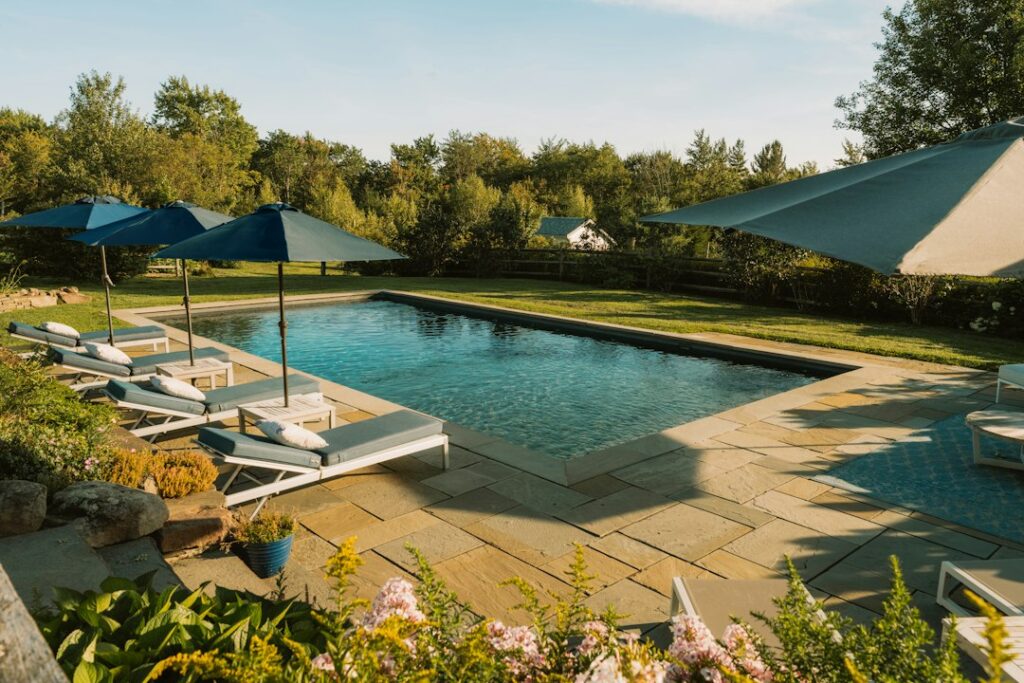
How can pools and water features be made safer?
A pool should never be treated as a pet-safe area simply because an animal can swim. Some pets tire quickly, panic near steep walls, or cannot find the steps after entering the water.
A safer pool setup includes:
- A secure barrier that limits unsupervised access
- Clearly visible steps or a shallow exit area
- A pet-accessible ramp when appropriate
- A cover designed to prevent entrapment
- Regular removal of standing water from covers and containers
- Supervision whenever a pet is near the pool
Pool chemicals can irritate skin, eyes, and the digestive system. Pets should not drink treated pool water, and they should be rinsed with clean water after swimming if irritation or frequent swimming becomes a concern.
Ponds, drainage swales, and decorative water features also require attention. Standing water may contain algae, bacteria, or parasites, while steep sides can make escape difficult. Keep water features clean, provide a stable exit point, and prevent pets from reaching unsafe portions.
What drainage and cleanup issues matter most?
A well-drained yard is safer and more comfortable than one with persistent mud or standing water. Poor drainage can create slippery surfaces, attract insects, damage turf, and encourage pets to drink contaminated water.
Watch for low areas near downspouts, retaining walls, patios, and fence lines. Redirecting roof runoff, improving soil structure, or creating a stable path may reduce repeated muddy conditions. Do not direct concentrated runoff into a neighboring property or toward a public drainage area without checking applicable requirements.
Pet waste should be removed frequently, especially near play areas and walkways. Waste left on lawns can contribute to odor, insects, and contamination during heavy rain. Keep cleanup tools in a covered location and wash hands after handling waste.
How can the yard support older or anxious pets?
A pet-friendly landscape should reflect the animal’s age and behavior. Older pets may need shorter routes, gentler slopes, and surfaces that provide traction. Anxious pets may feel safer with visual screening, quiet resting corners, and fewer sudden changes in the yard.
Avoid forcing every part of the property into one open space. A smaller, secure area may be more useful than a large yard with difficult terrain. Low steps, stable paths, shaded benches or platforms, and predictable access to water can make outdoor time more comfortable.
Before changing the landscape, observe where the pet naturally walks, rests, digs, and avoids. Those patterns often reveal practical improvements more clearly than a purely decorative plan.
What should be checked seasonally?
Seasonal inspections help identify hazards before they become emergencies. After severe weather, look for broken branches, exposed roots, damaged fencing, displaced stones, and standing water.
During warmer months, inspect for ticks, wasp nests, hot surfaces, and wilted or fallen plant material. During wet periods, monitor mud, erosion, and slippery slopes. Before winter, secure hoses, tools, chemicals, and equipment that could be chewed or knocked over.
The safest outdoor space is not necessarily the most elaborate. It is one that matches the pets’ habits, provides dependable shade and water, limits access to hazards, and receives regular inspection as the landscape changes.