
 See My Latest Article on HelloNation
Gardens that attract birds and butterflies provide more than flowers. They offer food, water, shelter, nesting material, and safe places to rest. In Milton, GA, a thoughtful mix of native trees, shrubs, perennials, and low-maintenance habitat features can support wildlife through the region’s warm summers, mild winters, and changing seasonal conditions.
What attracts birds and butterflies to a garden?
Birds and butterflies need several resources throughout their life cycles. Flowers alone are not enough. A successful wildlife garden combines nectar plants, caterpillar host plants, seed-producing plants, water, and protective cover.
Butterflies use nectar plants as adults, but their caterpillars often depend on specific host plants. Monarch caterpillars, for example, feed on milkweed. Other butterfly species use native trees, grasses, herbs, and shrubs for laying eggs and raising young.
Birds eat seeds, berries, and insects. Many species also rely on insects and caterpillars to feed their nestlings, even if adult birds later consume seeds or fruit. A yard with a few native plants that support insects may provide more value than a highly manicured landscape with many non-native ornamentals.
Which plants should be planted?
Choose a variety of native and well-adapted plants that bloom, fruit, or produce seeds at different times of year. Plants should also be matched to the amount of sunlight and moisture available in the planting area.
Useful choices for a Georgia garden may include:
- Milkweed and butterfly weed for monarchs and other pollinators
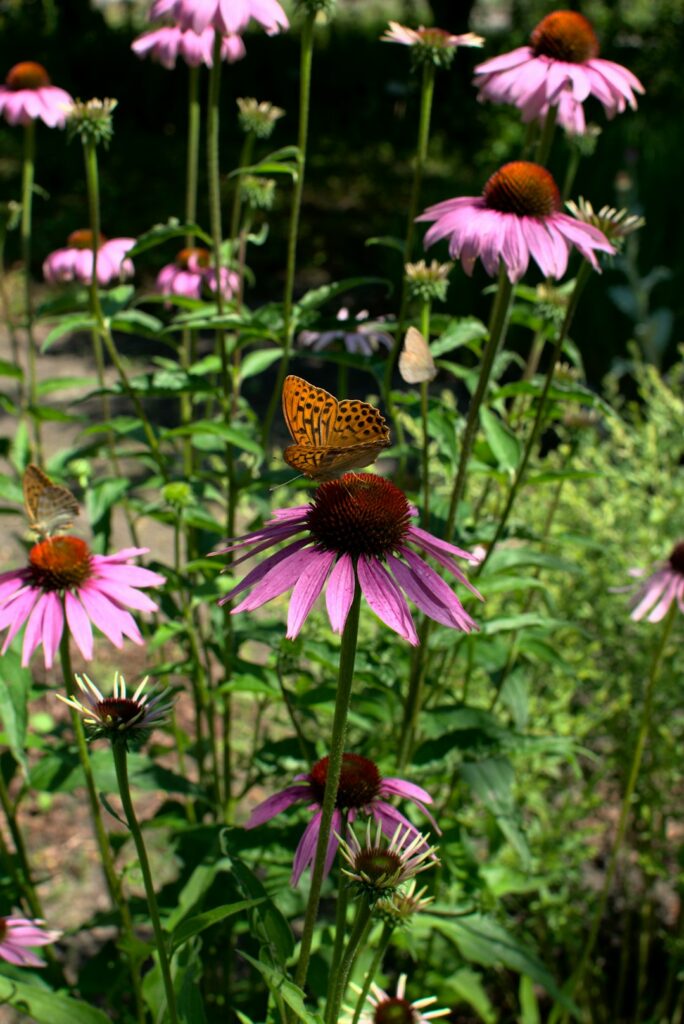
- Purple coneflower, black-eyed Susan, bee balm, phlox, and blazing star for nectar
- Native asters and goldenrods for late-season flowers
- Serviceberry, viburnum, spicebush, and native dogwood for berries, cover, and seasonal interest
- Oak, birch, magnolia, and other suitable native trees that support insects and provide nesting structure
- Native grasses and seed-producing perennials for finches, sparrows, and other birds
Planting in groups or drifts is usually more effective than spacing every flower far apart. A cluster of similarly colored blooms is easier for butterflies to find and creates a stronger visual feature in the landscape.
Single flowers are generally more accessible to butterflies and other insects than densely layered double flowers. Select plants for the site rather than choosing only by flower color. A sun-loving plant placed in deep shade will struggle, while a moisture-loving plant may decline in a dry, exposed bed.
How can a small yard support wildlife?
A large property is not required. Even a narrow planting bed, patio container collection, or small section of lawn can provide useful habitat if it contains several layers of vegetation.
Try combining:
- Low flowers and groundcovers
- Medium-height perennials
- Shrubs with berries or dense branches
- A small tree or vertical structure
- Leaf litter, stems, or brush in a less visible corner
Homes with pools or extensive hardscape can still support birds and butterflies by placing habitat features along the property edge, near fences, or around the perimeter of planting beds. Keep plants away from areas where falling leaves, berries, or insects would create a safety or maintenance concern around the pool.
A small garden beside a sunny wall may be suitable for nectar plants, while a shaded area beneath established trees can support woodland plants, ferns, and shrubs. The most productive design is often a series of connected planting pockets rather than one large formal bed.
What water sources do birds and butterflies need?
Birds benefit from shallow, clean water for drinking and bathing. A birdbath should be placed where birds can see approaching predators but close enough to shrubs or small trees for quick cover. Water should be changed regularly, especially during hot weather, and the basin should be scrubbed to prevent algae and mosquito problems.
Butterflies typically prefer shallow, damp areas rather than deep water. A simple “puddling” spot can be made with a shallow dish or a low section of soil containing sand, small stones, and moisture. Butterflies use these areas to obtain water and minerals.

Avoid placing water directly beneath feeders or in locations where runoff from treated lawns may collect. Around a pool, discourage wildlife from using the pool as its primary water source by providing a separate, shallow, easier-to-access option.
Should bird feeders be used?
Bird feeders can supplement natural food, but they should not replace native plants. Seed-producing flowers, berry-bearing shrubs, and mature trees provide food while also offering cover and nesting habitat.
If feeders are used, place them where fallen seed can be cleaned up and where birds are not forced to cross open areas exposed to predators. Clean feeders regularly and remove wet or moldy seed. In warm, humid weather, spoilage can happen quickly.
Native plants also attract insects, which are essential food for many young birds. Reducing the number of insects in a yard may make the landscape look tidy, but it can reduce the food available during nesting season.
How should pesticides and lawn maintenance be handled?
Limit insecticides, herbicides, and broad-spectrum treatments wherever possible. These products can affect butterflies, bees, caterpillars, and other insects that birds depend on for food.
Some leaf damage is normal in a wildlife garden. Caterpillars feeding on a few leaves are not necessarily a sign of an unhealthy landscape; they may be supporting birds or developing into adult butterflies.
Consider leaving fallen leaves beneath shrubs and trees, where they can shelter insects and return organic matter to the soil. Avoid cutting every perennial to the ground in autumn. Hollow stems, seed heads, and standing grasses provide winter cover and food.
For turf areas, reduce mowing frequency where practical and avoid allowing grass clippings or fertilizer to wash toward ponds, streams, drainage areas, or the pool.
How can seasonal planning improve results?
Wildlife activity changes throughout the year. Early spring flowers help insects emerging from winter, while summer blooms provide nectar during hot weather. Late-season asters, goldenrods, and seed-bearing plants are valuable when fewer flowers remain.
Fall is often a useful planting season because cooler temperatures allow roots to establish before the next summer. It is also a good time to add native trees and shrubs, divide established perennials, and leave some seed heads standing.
During winter, resist the urge to remove every fallen leaf and dead stem. A slightly untidy corner can provide shelter for overwintering insects and ground-foraging birds. Trimming can be done gradually in late winter or early spring, leaving some stems and cover in place.
What common mistakes should be avoided?
The most common mistake is planting only nectar flowers. Without host plants, butterflies may visit but are less likely to reproduce. Another mistake is choosing invasive or poorly adapted plants because they grow quickly or look attractive in a nursery container.
Avoid collecting plants from the wild. Nursery-propagated plants or responsibly grown seed are safer choices for natural populations.
It is also unnecessary to make every part of the yard look wild. A defined bed, mowed edge, path, and orderly arrangement of native plants can create a neat appearance while still providing meaningful habitat. The goal is not to eliminate lawn or formal landscaping, but to include enough living structure and seasonal resources for wildlife to use.
A garden becomes more useful as it develops. Observe which plants attract caterpillars, which shrubs hold berries, and which areas stay damp or sheltered. Those observations can guide future planting decisions better than appearance alone.